Showing posts with label short fiction by natalie. Show all posts

Monday, January 9, 2012

If, Then

Alexis Flores is pretty sure she has things figured out. The world makes sense, if you know how to look at it. Signs are everywhere, pointing out dangers and opportunities, pitfalls and advantages. They’re not obvious, giant neon-glowing billboards with instructions written just for you. No. They’re quiet things. Everyday things. The sort of thing you’d walk right past without a second thought. Nobody looks twice at ice cream melting on pavement or a shivering light bulb in a street lamp, not unless they know what they’re looking for. Which Alexis Flores does, and she never ignores the signs.

So when she sees the car ahead of them on I-10 riding the break harder than a Baptist Preacher on the devil, she doesn’t see a nervous driver. She sees Morse code in red lights, stop – stop – stop, and pulls her mom’s suburban off on the next exit, following the small road to a diner. The only establishment for miles and miles, it seems. One bright spot in the middle of pine trees and kudzu.

“I knew we shouldn’t’ve let you drive.” Phoebe Holt throws up her hands. Alexis sees them in them in the rear view mirror. Wrists covered in every kind of bracelet you can find at the Gulfport strip mall. “You owe me a Raging Fine ticket, Lex. Sweet Lord a’mighty, where the hell are we.”

From shotgun, Kayla Montgomery gathers her purse from the floor and glances over her shoulder at Phoebe. She’s used to following Alexis’s lead. At first, it bothered her, but it doesn’t any more. She’s seen enough to know that there’ll probably be a twenty-car pile-up a mile down the road, or a bomb at the concert right in their section. She doesn’t question Alexis’s gut anymore. She follows it.

Now, she turns to Phoebe, who’s fidgeting in the back seat and says, “We’re at Mama Beaux’s Diner for dinner. I hope they have pie.”

They aren’t so far from home. Just far enough that they’ve gone past all the Gulfport suburbs on the way to New Orleans. And just far enough that there’s nothing significant on the map for another dozen miles or more. Alexis thinks Mama Beaux’s must be fine dining for these parts judging by the number of trucks and SUVs in the parking lot. She decides there must be something good here. Something tasty. That’s why they were stopped here and not five miles before where their choices would’ve been fast food or faster food. Her stomach growls.

Walking inside the diner is like waking up in the middle of the day with the sun heavy on your skin. None of the girls realized how quiet it was in the parking lot, how lonely and dark, until they fell into the noise and warmth of Mama Beaux’s. It’s the sort of place that feels like home even if you’re only ever there once.

“Oh, they have pie,” Phoebe says, wryly. She points to a sign over the bar that reads, Yes, We’ve got pie!

The girls are seated in a booth that’s covered in rooster décor. Rosters are carved into the seats, a painting of a giant rooster stretches across the table, and a little rooster lamp sits between salt and pepper shakers and a bottle of ketchup.

“What’s the deal?” Kayla asks, looking up at Alexis with a glimmer in her eyes. “We’re supposed to miss the concert and buy a rooster?”

“Just Phoebe,” Alexis answers.

Phoebe’s expression lacks all humor, but she doesn’t have time to respond before their waiter stops at the edge of the table. Red hair, white t-shirt, blue jeans that have come by their distress honestly.

“Can I get you ladies something to drink?” He’s too young to be calling them ladies, but he does it with the sort of tired confidence wrought of repetition.

Phoebe stares. Kayla Simpers. Alexis says, “Coffee for all of us, please.”

“Comin’ right up,” he says, pushing his notepad into his back pocket without bothering to write on it.

“Never mind,” Kayla says when she’s sure he’s out of earshot. “It’s all so clear, now.”

But Alexis only roles her eyes and reaches for one of the menus he dropped on their table. There’s an entire page dedicated to pie. Alexis takes one look, notices a small smudge of dark purple-blue, and decides on a slice of blueberry. Kayla and Phoebe don’t decide so easily and when the waiter returns with their mugs of coffee on a tray, they ask him for his favorite.

“Custard,” he answers, his eyes drifting to Alexis. But Alexis orders blueberry.

^ ^ ^

Kayla won’t stop talking about Rooster. That’s what she’s decided to call the waiter, since they failed to obtain his name that night at the diner. She’s certain that’s why Alexis was pulled off the road. Not for the best pie they’ve ever tasted, but for Rooster. There was no terrible accident on the highway and no bomb at the Arena, but that doesn’t always mean much to Alexis. Sometimes, the signs are preventative and you never know why. You just have to trust. If they’d gone, then something horrible would’ve happened. Since they didn’t, nothing did. It’s self-evident from where Alexis stands.

When Kayla texts her a picture of a rooster with his white chest all puffed out and the caption, Keepin’ it cocky, scrawled beneath, Alexis just laughs. Sets the photo as Kayla’s icon in her phone and responds with an image of a dead end sign.

“Why do you always wait for things to happen to you?” Kayla asks when school’s finally over and she can dig into this conversation. “He was clearly into you, right? And you might deny it, but you’re into him.”

“Waiting is safest.” Alexis won’t deny she’s into Rooster, but without the signs, it’s pointless. If she’s meant to see him again, then she will. Until then, she dismisses any thoughts she’s begun to have of Rooster’s red hair.

This works pretty well until the very end of her shift at the Winn Dixie when she’s called back to the storeroom.

“What do you know about these pies?” The boss asks Alexis, but she’s not really expecting an answer. This boss is the sort of person who’s incessantly inquisitive. She answers questions with questions. Answers gum up the process.

Alexis sees three boxes on the floor between them. Each one has been sliced open to reveal neat stacks of pies.

“Why would I ever make an order like this?” The boss asks, running her middle finger down the order sheet again. “What am I going to do with two dozen custard pies? Lexie? Will you see what you can do with them?”

Alexis says she will and begins loading them onto a cart, two by two. It’s easy enough to find room for food in a grocery store.

“And why custard?” Her boss continues, pressing one palm to her forehead as if waiting for the logic of it.

“Maybe the vendor got it wrong?” Alexis suggests, careful to use a question, but it makes sense to her.

^ ^ ^

Alexis doesn’t know what to expect, but that’s okay. She doesn’t need to know. She just needs to follow the signs, and that’s what she does. Right back to Mama Beaux’s Diner. She sends Kayla a picture of the front door, just for the fun of it.

The diner isn’t as packed on a weeknight as it was the night they landed here. Alexis is given a booth all to her self. But she’s not just sitting there looking lonely. No. She’s prepared and has schoolbooks to spread out in a way that looks productive. Headphones, too, just in case.

A waiter appears at the end of her table. Alexis is surprised to find it’s not Rooster, but a woman with an apron tied high over her pregnant belly. Her cheeks are flushed and she’s as nice as her curls, but Alexis has begun to wonder what she’s doing here. She orders coffee and one slice of custard pie.

She’s mid-way through her second round of coffee – black with two packets of sugar, the real stuff, not the chemicals – when someone slides into the booth across from her.

It’s Rooster. And he looks even more like a rooster with his hair stuck up at odd angles, but his t-shirt is brown and that diminishes the comparison.

“I didn’t catch your name,” says Rooster. “And I meant to. But I had a feeling I’d see you again, so I didn’t panic.”

This is the sort of comment that makes Alexis smile against her will. She prefers to keep her emotional reactions private, but she was caught by surprise. She says, “Alexis Flores. And you’re right, this pie is excellent.”

“Ford Weber,” he answers, glancing at her books, then out the window where the parking lot is painted in gray scale. “I’m ready whenever you are.”

Alexis hears her favorite song come over the diner’s sound system, she notices that her bill comes to six dollars and fifty-four cents, leaving her exactly three dollars to tip. She follows the pattern to its logical conclusion: the two of them leave the diner for their first date.

It’s only a week later that Kayla and Phoebe beg Alexis to read the signs for them. They say they’d both like a rooster of their own. No matter how many times he’s come around, Kayla refuses to address him as anything but Rooster. Surprisingly, Ford’s okay with this.

Alexis thinks their request is a strange one. They’ve never had trouble finding dates or boyfriends when they wanted them. She asks them why they suddenly need her?

They give the same answer: your love is destiny.

“It’s not destiny,” she says, ignoring the bit about love. Sunlight falls through her bedroom window and hits a blue top in her closet. Instinctively, she puts it on. “It’s a negotiation.”

^ ^ ^

Ford is waiting for Alexis on the beach. It’s their sixth date and his turn to choose. Alexis was perplexed when he told her to bring a towel, which she also took to mean, “wear a bathing suit.”

There’s a sign by the boardwalk warning people away but those aren’t always the important signs, and Alexis walks past without reading. When the board walk ends, she kicks off her shoes, making her way across the sand to where Ford stands with the surf slipping around his toes. Alexis can already taste the salt.

“C’mon,” says Ford, pulling his shirt off over his head and his pants down over his hips until he stands only in his suit. “I’ve got something to show you.”

Alexis feels a thrill stutter through her body, it’s like caffeine hurrying her blood along as fast as it can go. This isn’t the sort of thing she does. Not because she wouldn’t, but because she doesn’t think of things like this. Not normally. She strips down to her one-piece and takes Ford’s hand.

The water is cold, at first, but it’s better when she’s in all the way to her neck, lifting her chin above the little waves that ripple past. There aren’t real waves this far behind the breaker islands, just their playful echoes, so it’s easy to swim into the deeper water.

“What do you want to show me?” Alexis asks, noting the way the water becomes dark up ahead when all around them the wavelets catch moonlight on their tips.

“If I tell you, it won’t be a surprise.”

Ford swims away, into the dark water where shadows leech all the red from his hair until it’s as black as waves. Alexis doesn’t follow. She treads water and scans the space ahead for any signs of danger. But if the danger’s beneath the surface, it could be anywhere. Why weren’t they supposed to be out here? Maybe she should have paid more attention to the sign by the boardwalk.

“Maybe we shouldn’t,” she calls. “It’s so dark, Ford. Let’s go back.”

But Ford swims a little farther from her. “Dark is the point. C’mon, they’ll only be here a little while, and maybe never again.”

Alexis knows this is a bad idea. The sign is clear. The path ahead is murky, unknown, and potentially dangerous. There’s only one established reaction to this sign: go back.

She doesn’t move.

“I don’t know,” she says. And distantly wonders if this is why Kayla and Phoebe wanted her help. Because knowing is safer than not?

Ford swims toward her a short way. Raises his hand, bobbing as he treads the black water. His palm fills with moonlight, but the back remains dark with shadow. Alexis thinks this, too, could be a sign, but she knows better. It’s not a sign. It feels too uncertain, too risky and exciting to be a sign. This is something else.

Moving to the edge of the dark water, Alexis probes it with her toe and shivers at how much colder it is there than here. If she returns to shore, she knows she’ll be safe. She will dry off in the moonlight, climb back into her clothes, and return home none the worse for the wear. If she doesn’t go back to shore, anything might happen, and ‘anything’ includes the full spectrum of horrible things.

Ford sees her hesitation. “I’ll go back with you if you want. But I promise, this is worth it, and I’ll be with you.”

Again, Alexis feels a twinge of excitement. If she goes with him, she doesn’t know what will happen. She doesn’t know if it will be safe or exciting and she isn’t sure which one is right. It makes her tread faster and her skin feel hotter. It makes her feel awake and alive. She wonders if this is what it feels like to live without the safety of signs, to never know which choice is the safest.

She looks again at Ford’s hand, one small piece of light surrounded by darkness, takes a deep breath, and crosses into the dark water.

*****
Thank you for reading. Check back on Monday for a new Tangle started by Lacey.

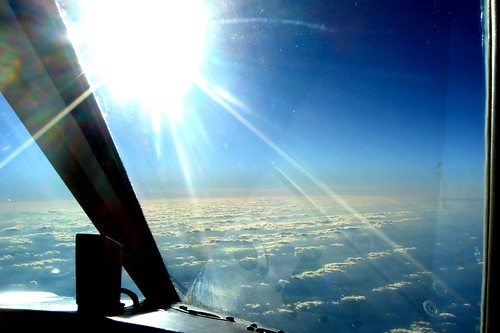
Photo by kagey_b via Flickr Creative Commons.

Monday, October 10, 2011

Second Star Run


Somebody had to do it. Holes in the N.E.V.E.R. shield were to be expected - you couldn’t put something so close to the sun and not expect a few holes to appear now and again - but even so they needed be filled. That meant requisitioning an atmospheric cruiser and a solider. One of those was easier to come by than the other, so it was good or lucky that the need only arose every half century, give or take.

Nobody ever wanted to be the one chosen to patch the holes.

This time, though, it was a boy of only seventeen who volunteered. Before the lottery was even announced, he stepped through the heavily tinted doors of the Department for Atmospheric Management and asked to speak with Commander Rivera.

Petty Officer Cooper would tell the story later. How the boy walked in with a smile on his face and stole the air from the room. How the dust that seemed to settle on everybody’s shoulders, had somehow missed his, leaving his uniform a dark and unfiltered blue. How certain he’d been and how selfless. How Commander Rivera told her with tears in his eyes that the boy was the bravest soul they’d ever know.

The story hit the news before the all the appropriate paperwork had made its way through the system. “A boy to save the world!” they shouted across every feed still available, “A boy to do what men feared to!” How could such a boy exist and could he really know what it was he had committed himself to? Some, perhaps many, doubted he’d follow through. Cynics called it nothing more than a cruel publicity stunt and argued that the lottery should continue as scheduled. Others demanded he be evaluated for illness and others still called for someone else, someone past the prime of life to step forward and take the boy’s place.

The morning of the launch, the boy arrived at the hanger early. He wore the same jumper he’d been assigned on his first day of training a year ago. Though it showed signs of wear around knees and elbows - he was a still-growing boy, after all – it was clean and adorned appropriately. His hair was perhaps a touch longer than it should have been, brushed back into a dark cloud behind his ears. Nothing about him spoke to the importance of the task that lay just ahead, and though everyone in the hanger stopped to watch him walk to the center where his cruiser stood in a halo of light, he didn’t seem to notice.

With the sort of practiced disinterest of someone who’s logged hundreds of hours of flight time, he inspected his new cruiser. It was old. Not so old that it wouldn’t make the trip, but old enough that it would handle differently. More weight in the nose would require a certain amount of adaptation, he knew, but he’d taken more easily to flying than anyone Flight Deck Officer Darl could recall. He’d have preferred one of the newer models, of course; the cruisers that could punch through the atmosphere without even trying. For volunteering he might have gotten it. The DAM was so stunned by his unprecedented offer that they might have given him his pick of birds to ride the back of the wind, but sending new tech up to the shield was a waste.

Only one person was brave enough to be near the boy that morning. Airman Evans was at the top of the ladder, leaning over the prow of the cruiser, polishing the windshield one last time. She’d been going over and over the craft all morning, constantly tinkering with anything her fingers touched. If the old girl didn’t fly, Evans would take the blame and her birds always, always flew.

“Ever gone up in one of the ancients?” She called down to the boy. Even at the top of the stairs, she was small. More than once in her term as resident grease monkey she’d been mistaken for a child. The boy, though, knew that powerful things often came in small packages and had never underestimated Evans.

“Not like this,” he answered, running one hand over the nose where the cruiser’s name, Second Star, was painted in blue and yellow. Though scratched and faded, the words were still legible and fitting, he thought, for the work at hand.

“She won’t let you down,” she said as though this were any other flight on any other day. “I’ve made sure of it.”

The boy’s smile was clever. She had never let him down and he was very well aware that without her, he wouldn’t fly at all. “What a good team we’ve been.”

Quickly then, she descended the stairs and wrapped her arms around his neck, and with great emotion, she spoke into his ear, “The nanogel distribution pods for the N.E.V.E.R. shield are already loaded and ready to go. When you’re outside the shield, all you have to do is locate the hole and drop the NPDs. Drop and run, got it? The sun’ll do the rest and more if you’re not fast. I’ve pushed as much fuel into this thing as it’ll hold. If you burn hard, you might be able to make it back through. If anyone can do it, you can.”

Everyone in the force knew what it took to patch the shield even if no one ever wanted to do it. It was long before their time that the sun grew too hot and the atmosphere too thin. The shield was designed to make life bearable on Earth in the absence of natural phenomenon meant to do the same. Those things were more myth than memory these days. The boy and Evans had only ever seen things like snow and ice caps in old photographs, films, and paintings. The shield was a masterpiece of atmospheric engineering and when it operated properly, it hardly mattered that the earth hadn’t seen snow in more than a century. But every once in a while, it would succumb, much like the ice sheets had, and require attention.

The review wasn’t necessary. Evans seemed to say it more for her own comfort than anything, but the boy was patient. He pulled his arms tight around her waist and nodded his nose through her curly, blonde ponytail. “Understood.”

If there was sadness in him, he didn’t recognize it and therefore, decided there was none. He didn’t regret his choice. It was, in fact, the most selfish decision he’d ever made. That was why he refused to speak to the press and why he’d politely declined all efforts made to throw him a pre-launch party.

“Good.” Evans pulled away, searching the boy’s face for something to keep with her when he left. She didn’t find it. “Oh, God love you, why are you doing this? They could have found someone else. Someone older, you know? Like they usually do. Someone with an incurable disease with two months to live, or like last time, that convict who murdered those kids and wanted redemption? Someone who’d already lived.”

The boy knew his answer wouldn’t satisfy her, but he gave it still. “I want to go.”

“But why? Please, just tell me why because I don’t understand.” She took a small step back, pushing fisted hands into her hips.

Outside the hanger, the sky was dusty and hot, a claustrophobic sky with no room for hope. He wanted to be above it, where history promised something wide and open and blue. As blue, perhaps, as Airmen Evans’ eyes.

“I want to touch the sky,” he said, placing a hand on the ladder railing. He imagined how incredible the sky would look through the polished windshield and his smile was uncontainable. “And I never want to grow up.”

*******
Thank you for reading! Come back on Monday for a new Tangle started by Lacey!

Photo by Global Jet via Flickr Creative Commons

Monday, February 28, 2011

Butterfly Girl

“You are an impossible girl, Sascha,” mom said, stroking the skin of my back.

Wrapped in the sticky fingers of a fever, I hugged the pillow to my face letting it pull some of the heat from my cheeks. I responded with a single drawn out syllable, “Mmmm.”

Mom laughed and danced her fingers over my shoulder blades. “How old are you, now? Seven? Eight?” She teased, trying to distract me from the roiling of my belly. I would not be budged. “Well, I can see that you are eight. Your wings are just beginning to show and what sort of wings do you think they are?”

I turned and pressed my head against her knee. I was too miserable to tell her I wasn’t interested in her ridiculous ramblings. Nothing would keep her from telling me what sort of wings I had, just like nothing could have stopped her from telling me I had a cricket where my heart should be and a lion’s roar where other people held their fear.

My sisters would say if mom’s imagination were a stone, it would grow flowers.

“They are butterfly wings, Sascha. And people will see you and they will love you. It is impossible not to.”

* * *

I saw them at Cara Phillip’s eleventh birthday sleepover. We were playing Bloody Mary and it was my turn in the stark black and white bathroom. It was unwelcoming even when the lights were on, so sightings of Bloody Mary were higher here than they were in bathrooms with pastel seashells or baby duckling themes. The single candle we lit cast sharp shadows and cinnamon scent into the corners.

It was impossible that she actually existed, but that was why she was so enticing. Stuffed with cookies and popcorn, having painted our nails and obsessed over the breasts we didn’t yet have, we all wanted to believe in impossible things.

The toilet had a loud flush that sounded like it was pulling all the extra noise from the world. My words were lost beneath its burbling as I turned slowly three times.

No matter how many times I’d done this without seeing the infamous woman, the moment just before I opened my eyes was my favorite. My breath quickened, my heart tapped a steady beat against my chest, and I felt hopeful and anxious, like the world was about the change, like I was about to change. I played the game for that moment, when every thing I wanted to happen, could happen.

I opened my eyes.

Candlelight flashed over the mirror, erratic and indifferent. I saw a slice of my face with bright color behind it and I screamed.

All nine girls pushed through the door at once saying my name, asking what I’d seen. Their voices were excited and eager, all of them wanting validation of the story we’d been telling each other.

Cara climbed into the tub behind me and wrapped her arms around my waist. “Did you see her?” She rested her sharp chin on my shoulder and watched my face in the mirror while everyone else watched her.

I couldn’t tell her what I’d actually seen, wings spreading out behind me in brilliant blues and golds. It wasn’t what she wanted to hear. It wasn’t what any of them wanted to hear, so I only nodded my head and said, “it was horrible.”

But I didn’t think that at all.

* * *

I looked for them after that. I tried to catch them in the mirror, looking through the corner of my eye or squinting to blur my vision. I tried imagining them full and spread out in the sunlight, real and bright. I tried to spot them anywhere my reflection might appear, windows, puddles, even in dark sunglasses.

It didn’t matter how hard I looked I couldn’t find them again.

* * *

“You only become more beautiful every day.” Mom pulled a brush through my hair and I dabbed gloss over my lips. It was the same gloss Cara used and I deferred to her on all matters of beauty. “And your wings are even more stunning than ever.”

Birds sang evening songs in the maple tree just outside my bedroom window, promising a perfect evening. I wanted to climb outside, into the tree and sing with them.

“Mom,” I complained. “Don’t you think I’m a little old for that sort of thing?”

“You will never outgrow your wings.” She twisted my hair into thick, dark ropes in her hands, following the style I’d picked out of a magazine. “It won’t be long before others see them, too.”

“Mmmm.” I twisted the cap of my gloss and dropped it into my purse. It matched my dress perfectly and I was more excited than mom knew to attend my first formal dance.

She pinned my hair in place, tucking little white and blue flowers into big curls. “Mmmm,” she said in response.

* * *

Cara announced there would be a Summer’s End party at the lake and so there was. We brought our bathing suits and beach towels, someone brought a cooler of beer, and we claimed a full half-mile of shore all to ourselves. That was the sort of power Cara had.

When the sun was gone entirely and we left the volleyball court for the bonfire. I don’t remember who saw them first. I was dancing with Cara and her entourage to a hyper song with more bass than anything that sounded like actual music when someone shouted my name and we all stopped.

“Sascha, whoa! Do you guys see that?” I couldn’t see through the light of the bonfire. The voice came out of the blackness behind it and though it sounded familiar, I couldn’t put a name to it. I didn’t answer. I didn’t need to. Everyone was staring and my name flew to me from all directions. Someone said, “She’s like a butterfly,” and I knew what they’d seen.

I wanted to see it, too. And I wanted to hide it from them before they’d seen too much. How could I share a piece of myself I hadn’t yet seen? It didn’t seem fair to catch descriptions, “blue” and “gold” and “impossible” and not know the shape of the thing they were carving out with their words.

“Are you all high?” Cara’s voice was a splash of cold water. “Think we’ve all had enough for tonight, don’t you?” She pushed the lid of the cooler down and stood before it like a Grecian statue, all impossible curves and power.

Around us, the mutterings became sharper with “bitch” dropped loudly enough for Cara to hear. She pretended not to and turned to me with a concerned smile. “People can be such freaks,” she said with emphasis, but her eyes jumped from my face to the space above my shoulder. When she looked back again there was an extra shadow in her light brown eyes.

* * *

The changes started slowly, but I noticed them right away because each one was more impossible than the last.

I was never alone – not in the hallway, not at lunch, not on my walk to the parking lot after school. Someone was always with me.

People asked my opinion before asking Cara’s.

Weekend plans started with me. If I said I was going to see the school play, everyone I knew went to see the school play.

Butterflies showed up everywhere. Butterfly stickers plastered my locker, girls wore butterfly print t-shirts, butterfly earrings, butterfly barrettes in their hair. My name became a dim memory, replaced with Butterfly or Mariposa or Papillon.

And Cara became quiet.

* * *

“Have you seen them, yet?” Mom sliced tomatoes and tossed them into five bowls of salad. I handed her another one and stirred the pasta. I shrugged, not only to answer her question, but hoping to feel something more than my shoulders move.

I didn’t feel anything.

“No.”

She tossed more tomatoes and washed her hands. “You will. When the time is right, you will.”

It wasn’t easy to believe her and it wasn’t easy to accept that so many others had seen something about me that was so secret I couldn’t even choose to share it. It seemed that my wings belonged more to other people than to me.

Every day, I looked for them less.

* * *

Cara sent a text that said, sorry things have come to this, but it’s time to get out of the temple, little goddess.

The next day, the floor in front of my locker was littered with the wings of butterflies. They were so bright and beautiful it was as if someone had brought every color under the sun here to murder them.

I bent to collect them, my heart a trembling thing in my chest, and held them delicately in my hands. No one stopped to help me. They gave me a wide berth and did not step on any of the wings. I could pick no words out of their fearful whispers.

I didn’t cry until I was in my car and then I let my tears fall all the way to the lake. I carried the bundle of wings to the end of a long pier and sat with my legs folded beneath me. One by one, I dropped the wings into the water. They floated away from me in all directions, reaching up and out but not slipping beneath the dark water.

When the last one had flown from my fingertips, I closed my eyes.

Sunlight pulled the last of the tears from my skin. My shoulders rolled back and I felt the familiar stirring in my belly that the world was about to change, that I was about to change.

I opened my eyes and there in the water, drawn out in the colorful wings of Cara’s victims, were my own. Impossible and bright.


* * *
Check back on Wednesday for a complete short story from Valerie!

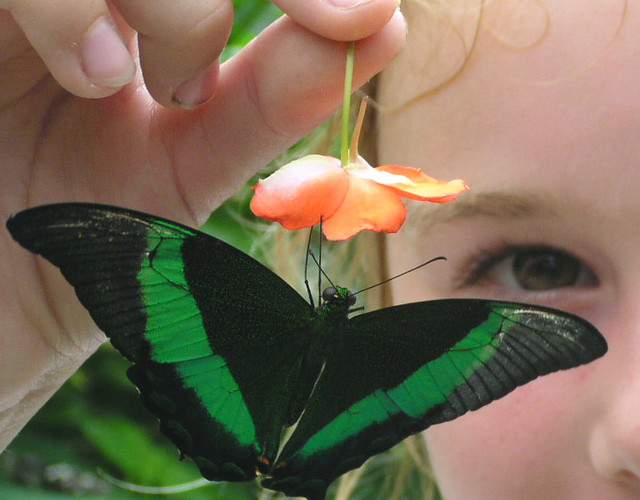
Image courtesy of e³°°° via Flickr Creative Commons.

Friday, February 4, 2011

Water Sacrifice

I was twelve the day my papa took me to the clinic in Old Ogallala. He left me in the small waiting room where green light filtered through the spill of lettuce, tomato, and green bean plants in the sky gardens outside while he disappeared down a narrow hallway to speak with the artist. The air was filled with buzzing and the distant sounds of a radio, but the waiting room was empty except for the girl sitting behind the desk. She held a book to her face and made no signs of having an interest in conversation. I picked a seat and waited staring at a sign that read, “No Water Kept on Premises!”

Papa returned with a guilty set of lines on his brow. He avoided my eyes when he held is hand in the air and said, “Come here, Eira.”

He took me to a room sectioned off into smaller, semi-private spaces with shower curtains of all colors and designs. We ducked behind one with tall palm trees and smiling monkeys where an old man with hard, black eyes sat.

“It was an accident,” I whispered so only papa could hear me. “I promise I won’t do it again.”

His frown was a heavy thing, wet at the corners and wordless.

My papa looked away and the black-eyed man put knife between my palms and cut fast. He made quick work of the stitches. I shed a thimble full of tears before it was done and left the clinic with my papa’s fear on my hands.

* * *

It was an accident that I met Tarn at all. I was as far from town as I could get on an ancient bicycle. The sky was wide-open and so blue it hurt to look at. I rode until I found the edges of an old wind farm and pushed my way through the late autumn wheat right up to the base of a turbine. They hadn’t been used for ages and rust grew around the pole like a fungus. When the wind blew, it drew long, mournful sighs from the propellers.

Far beneath my feet, the aquifer was losing its charge, dropping precious inches in water level. The entire town was on edge. All eyes were on the sky watching for miracles.

But the sky was selfish.

Holding my hands over the dying stalks of wheat, I felt the tingle in the middle of my palms that mean water was near and followed it through the field until my hands were warm all over. If I closed my eyes, I could sense how near it was, how easy it would be to draw up into my hands, how many things I could do with just that much.

My fingers itched. I had never been so bold. To waste water on magic was the thing most feared by my town. But it wasn’t a waste if it called water down from the skies. It was a sacrifice.

I stopped when the pull on my hands was so strong I had to resist dropping to the ground. And then I pulled back.

Water sifted up from the ground in tiny drops to pool in my hands as though I held a bowl. My hands became hot and then hotter. I tried to stop, to throw it all into the sky as I’d planned, but the water was stubborn and so hot on my skin.

I heard a noise struggle out from my throat and I knelt in the wheat to bury my hands in anything that might siphon the water from them.

“Be still,” a voice spoke in my ear and I could not do as it asked, though I tried.

Hands gripped my wrists and pushed my palms open against the earth. I closed my eyes, felt hands covering mine and little by little the pain fell away until I could hear the wailing of the turbine over the sound of my breathing.

“Still in pain?” He asked. I opened my eyes to find a boy the color of parched earth held my hands in his. He wore a dusty green jacket with a tall collar that used to be square at the edges, but had been frayed into half circles.

I moved my fingers and winced at the pinch in my knuckles, but the skin was only pink and not red and blistered as I feared it would be. “Not so much.” I continued to demonstrate my range of motion, flipping my hands over and making fists. The old scars were bright white against my palms.

He watched my hands as long as I did. Longer, even, until I pulled them away to rest lightly in my lap.

“I’ve never met another one,” I said. “Dowser.” Saying the name aloud would have seemed a brave or stupid thing if I hadn’t just tried to burn my hands off. The quiet between us was a field of wheat.

“Tarn,” he offered. “Did they do that to you?” He lifted a finger to point, but I knew what he meant.

I opened my palms to the sky. “Most parents do.”

“It doesn’t work.” He stood then and I saw where he’d come from. The door at the base of the turbine stood open and I realized he must live here. Away from everyone. Alone.

“It does a little.”

* * *

He was my secret.

I visited every month, sometimes twice, to learn what he knew. Patiently, he taught me to tease the water from the earth and guide it through the transformation. It would always burn a little, he said, the trick was in the breath.

“Soon you’ll be able to call a storm from the sky.” In the bowl of his palms, water became light and air. It was hot as flame and I could feel my cheeks warm though I was three feet away.

“Rain would help my town. It’s what everyone prays for.” I opened my hand and felt the tingle in my palm. “Maybe if I could only show them, they would understand.”

“They won’t, Eira.” He turned and the sun cast a dark shadow over his face. “It’s better not to try.”

I thought of my papa’s face on the day I’d set the armchair on fire. All it took was the glass of water I’d been holding when he told me I wasn’t yet old enough to attend a school dance. I’d argued as though my life depended on it and then the glass was empty and the chair was covered in flames that twirled and spun like girls in dresses.

“Because they’re afraid.” I studied the scars on my palms and understood, perhaps for the first time, that he thought he was protecting me. “Because they don’t understand how it can help them. Us.”

“They understand their fears above all things.” His voice was thick and I wondered at all the things he hadn’t said.

I didn’t argue because I knew it was true. My scars were not unique. The town was filled with slashed palms because of an old superstition that it would keep the magic away. My papa and I knew better, and it was the worst kind of secret.

But out here there were no secrets, because there was no one to keep them from.

“Are you afraid of them?” I asked.

He didn’t answer. In the sky above, the propeller turned, calling out to the others that stood so far away. But its call was lost to the wind. No one to hear it except for us.

* * *

The storm arrived on a summer evening when the air was so heavy with water my palms sang.

It was too much at once. The roads and spillways were too full too fast. Sirens wailed beneath long chains of thunder. The clouds carried lightening in their bellies and dumped more water than all the town had dreamed of for hours.

When water began to seep beneath the doorway, papa packed a small bag and told me to do the same. We raced through the house unplugging and lifting anything too heavy to take with us and then we left and climbed toward the school with water rushing quickly past our knees. It was enough to knock us over in places. Papa gripped my hand and we pulled and balanced against each other.

The school sat atop the only hill high enough to be called a hill in Old Ogallala. Everyone was there or making their way as we were.

Papa must have thought we were safe because the water was lower and less fierce. He let go of my hand and bent over, breathing hard. “Go on,” he said. “I’m right behind you.”

For a moment, the rain slowed and the sky shone blue and white and grey. I could hear the soft whimpers of children and the soothing words of their parents, the siren calling from the edge of town, the water rushing, rushing, rushing.

My palms resonated like bells and I turned in time to see the great swell of water racing to devour us. I saw my papa standing below me on the hill, his eyes on me, his mouth a hard line. I tasted water on my tongue and knew that if I did nothing, my papa would die.

I raised my palms and I pushed against the vibration in them. The water pushed back and I drew a deep breath to steady my feet and with a cry that sounded too full to have come from my lungs, I pushed again.

I saw the water shift, tossing waves into the air as though a thousand beasts were thrashing beneath the surface, and change its course. Just slightly at first and then with purpose. I pushed again and the water receded farther down the hillside. I pushed again and felt how quickly the water responded to me now and I continued to direct it as I walked back down the hill to where my father stood.

His eyes were soft and sad and he raised them to the sky. Behind us, the town had grown loud with murmurs. I knew they watched me, and worse, that they feared me. Papa knew it too.

He took my hand in his and rubbed one rough thumb over my palm. His breathing was ragged, tripping over tears. He opened his mouth to speak, but closed it again with a shake of his head. Then, he stepped away.

Our hands fell apart. Mine was still warm with the calling of water, but also cold without his. I didn’t need to turn to see the decision of the town, it was all over papa’s face. I said, “Goodbye, Papa,” and I stepped into the water.

*******
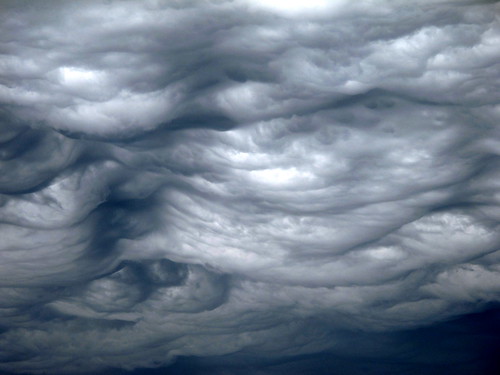
Photo by [Clint] via Flickr Creative Commons

Wednesday, December 1, 2010

Prophet

This is my curse: I will tell you your future, but you won’t believe me.

***

My apartment was tiny, which was why the trainer’s sharp knock sounded like a volcano erupting through my front door.

He was short and round and gruff, and he made no attempts at polite introductions. “You’re that prophet chick, yeah?” His voice was no surprise, shattered and coarse.

I had never been addressed so informally as a temple prophet, but it didn’t bother me anymore. No purpose was served in trying to be friendly and I much preferred speed over formality these days.

I nodded and told him my fee, which was low enough to be acceptable and high enough to keep me fed.

He pulled his tongue over his teeth, sucking them as he considered my offer. “Right,” he said at last. “You see this boy here? I want to know if he’ll win.”

Following his quick jerk of a gesture, I saw that a boy slouched against the wall not too far down my hall. He wore a dark green hoodie that hung loosely around him. I didn’t need to be a seer to know what strength lay just beneath the dark folds.

I held out my hand to him and after a moment, he pushed away from the wall and took it. Heavy calluses coated the skin of his palms and the pads of his fingers. These were warriors hands, but the little smile he flashed me held nothing of the battle rage inside it.

“I’m Troy,” he said. His eyes were an endless mosaic of emerald and earth.

“Kassandra,” I said and though I tried not to smile, I felt the edges of my lips rise.

With my eyes closed, I listened and his future came to me on the back of a snake’s whisper. I heard them speak of blood and death and pain, but also of victory.

“He will win,” I said to the trainer and saw in his frown that he would not believe me. But when my prophecy came to pass, he would remember and he would tell his friends and they would come seeking my council. It was always this way.

I took his money and I closed the door.

***

I didn’t expect to see him again, but I was glad to find Troy at my door on the day after his match. His smile was small and uncertain beneath black and purple bruises. They made a strangely beautiful pair on his face.

He’d won, of course, and his victory had been replayed on all the major channels. Arena matches always made good news, but his was exceptional because he was seventeen and unlikely.

“Wondering who your new trainer might be?” I asked. The news channels had also covered the trainer’s lack of confidence in such an excellent fighter with glee. He’d lost everything betting on the other guy. Troy was in the market and probably drowning in prestigious offers.

He grinned as much as his bruises allowed. “Not exactly. I was wondering if you’d like to get dinner with me.” His eyes narrowed suddenly. “Or did you know that already?”

I couldn’t help but laugh. I couldn’t remember the last time someone knocked on my door without asking for the future.

“It doesn’t work quite like that,” I answered honestly. Somewhere behind me, wind chimes sang lightly from my little third story balcony. The breeze that teased the song from them tickled my chin and I said, “Yes, I would love to.”

***

“Be quiet and wait here.” I pulled a comb through my hair and straightened the creases of my dress.

“You won’t even know I’m here,” he said, kissing the palm of my hand and falling back on the bed.

The woman at my door was small with age. All of her seemed to bed toward the ground, her mouth was a sour, orange peel of a pout. She thrust out her fist full of cash with a little grunt.

“I must know,” she said in a voice that had lost all consistency and was as flimsy as maple syrup. “Will my granddaughter survive the trip?”

I took her hand and waited for the snakes in my ears to share their secrets. They spoke of darkness and elation and of an illness too great to defeat.

“No,” I said. “Please, believe me, she will not survive.”

***

The news of her death came two weeks later. I sat on the couch with my legs draped across Troy’s lap. The air was thick with the scent of rosemary and roast chicken because Troy had decided we should try being domestic for the evening.

But the little girl had gone with her father on the hike to the top of Mount Atlas and had mistakenly eaten the poison berry that grows in those cold woods. The reporter called it a tragedy before cutting to footage of the grandmother with the orange peel mouth sobbing into a kerchief.

“Why don’t they believe you?” Troy asked sounding distressed.

I gave the only answer I could, knowing that no matter how he might love me, it would be the same for him as it had been for my mother and my father and my two sisters. “They can’t.”

***

“Tell me my future, Kay,” Troy said into my ear. He tugged the lobe through his teeth and planted a kiss on my neck.

I laughed and turned in his arms so that my nose brushed over his. Tracing the three grooved scars that traveled down his left cheek, I frowned at the knowledge that he would once again enter the arena, this time to face a man twice his age and size.

“You know I won’t.” I said. “No futures.”

He brought his hands to my cheeks. “I will believe you. I promise.”

I still refused, but as he slept that night, I wove my fingers through his and listened to the snakes in my ears. They told me that he would make a choice, that in the end he would chose to let his opponent live and this would be his death.

And I wept knowing that he would die because he was kind, and I wept because I would make him break his promise to me.

When he woke, I said, “Troy, you must let him live in the end. Don’t kill him,” knowing that he would be unable to do as I said because of my curse and instead, he would kill the man who would have killed him.

He smelled like leather and soap when he leaned down to kiss me with a smile on his lips. “As you say, my lady prophet.”

***

The stands were filled to the top. I sat in the middle of them, my heart louder than all the screaming spectators could ever be.

The fight was brutal and long, which always pleased the arena keepers. Soon, blood shone on the dusty ground and on the metal of swords and shields. The smell of popcorn in the air made me sick.

And then Troy had knocked his opponent to the ground. Dust hung in the air around his feet as he crouched over the man to see if he lived. I waited to see his sword rise for the killing blow, but he lifted his gaze instead and found me in the middle of a thousand raging fans. It seemed that he smiled then, with his mosaic eyes on mine, and then he stood.

The world was a lion’s roar when I realized he’d kept his promise.

The world was a distant hum when I realized what that meant.

And the world was silent when the sword split his skin and slid into his heart.


***
Check back on Friday for fiction from Valerie!

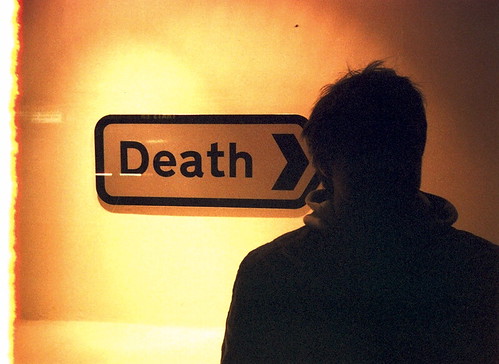
Photo courtesy of Foreign Roads via Flickr Creative Commons

  © Blogger template Shush by Ourblogtemplates.com 2009

Back to TOP